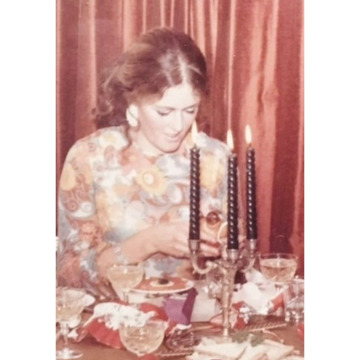
Twice in the last two years my plans to see Liz had to be cancelled at the last minute. I knew she’d been failing and had hoped an opportunity for a last embrace would arise in early June.
We met at Oxford in 1967 through a circle of brilliant friends at LMH and other colleges, too many of whom have left us already. Her quick understanding, culture, curiosity and appetite for life, and hair-raising stories of travelling alone—this tall, stately, beautiful young woman—on the Trans-Siberian railway to meet her parents in Japan—held me enthralled.
We talked endlessly—politics, anthropology, philosophy, there wasn’t much she didn’t know something about. Later,we did some music-making—Liz was also an accomplished pianist.
She visited me several times after I moved to Paris in 1969, leaving lasting memories among French and English friends who met her there. She impressed with her insights and incisive comments, delivering some surprising political predictions that actually materialized.
She was the first person I called whenever I came to London. We saw less of each other after I married and after she moved to Bristol, though she continued to visit me and my family in Paris, and she came to stay with us in Devon in the early-80s.
From a distance, I followed with admiration accounts of her growing stature as a gifted oncologist, combining the quest for more effective treatments with uncompromising commitment to the wellbeing of her patients, a truly caring physician, even at great cost to herself.
But then she always was forthright in her views, and you’d better know what you were talking about if you disagreed with her. She could be dismayingly right whatever the subject.
Her death is surely a grievous loss for many. It certainly is for me. I cannot say how much I would love to have been with you to celebrate her personality, her achievements, and her zest for life.
I shall raise a glass, possibly more, in consolation.
Rupert Swyer
26/05/2025